International Solidarity in the Light of Global Resistance


Of quaint metaphysical constructs conjured up in an exotically distant jungle where pipe smoking poet gods and indomitable corn-people hold an illusive holy grail of rebel hope that renders you spellbound until you leave the mystical space, and then disappears - like a sieve fisted find.

by Ramor Ryan

From Perspectives, January 2006

It was thrilling to wake up in Dublin on Jan 1st 1994 to the news of the Zapatista uprising in Mexico. It quickly became clear that this was a new kind of Latin insurgency that superseded the ideological straightjacket of the Cold War era, and embraced a whole new formulation of how to start a revolution. Sub Comandante Marcos was standing in the centre square of San Cristobal talking a more enlightened form of liberation than had been articulated before. Gone was the old Leninist language and as we learned soon enough - ways of organizing. For anarchists across the globe, it was as if all their Christmases had come at once. An apparently anti-authoritarian leaning peasant guerrilla army who rising up against an International neo-liberal trade agreement! Their red and black flag! And with those old rifles and antiquated uniforms, they even had a passing resemblance to the Spanish Anarchist militias of 1936!!!

I would have been out on the first plane to Chiapas ready to join the insurgency, except the financial limitations of the Irish dole were such that it would be a full year before I finally got there. My mate Mick did manage to get out to Chiapas within two weeks of the uprising. His first letter back was exhaultant (no email in those days): anarchists from all over Mexico, the States and indeed, everywhere, were already converging on the rebel zone to seek out a role to play in this new devastatingly exciting and urgent uprising.

I had caught the last few months of the Sandinista Revolution in Nicaragua, before they were deposed of power in Feb. of 1990. Picking coffee with a Sandinistas collective and teaching English to a Sandinistas class I cut my teeth as an international solidarity volunteer. It was very rewarding for me, but I had to leave my Anarchy back at home – the Sandinista revolution was leftist and authoritarian and harbored no Anarchist faction, indeed promoted a line that was distinctly unfriendly to such a current of thought. Nevertheless, there were elements of the Sandinista program – their anti-imperialism, their grass roots support of peoples’ education and health, as well as their lack of ideological rigidity allowed space for anarchists of my ilk (of which there were quite a few working in the country) to take part a little on the side.

The early nineties saw me traveling further into this tumultuous political space of Latin America, involving myself in anti-capitalist campaigns in Colombia (multinational exploitation) and Belize (Union recognition for Banana workers). But it was the Zapatista Uprising that sealed my fate, and ensured my presence intermittently but unrelentingly for the ensuing 10 years. Much of the time I involved myself in the Zapatista struggle working in the category designated international solidarity.

In response to the Mexican military advances on the rebel zone, the Zapatistas put out a call in 1995 for volunteers to come and place themselves at the front line of conflict – human shields as such. Our group, the Irish Mexico Group went one sep further- we set up a solidarity encampment in one such front line community, called 10 de Abril, (a cattle farm occupied by 70 Zapatista families) and attempted to do consolidate a more interactive role in the community. Volunteers busied themselves in the fields, in the classrooms and brought in resources for development projects. The goal was to stand shoulder to shoulder as companeros, not solely as human shields. The harvest of this day to day solidarity work became apparent later in 1998, when the Mexican military violently invaded the community, and after the first wave of volunteers got grabbed and deported by the authorities (thereby rising the profile of the incident to an international story), the remaining volunteers were offered the choice by the EZLN of confronting the military together in the tactical self-defense of the community. A level of trust and confidence between Zapatistas and foreigners had been forged that allowed for such an unusual intimacy of shared struggle.

The problem with international solidarity is that at its most effective it’s a tactical deployment and as it develops into a long term strategy, it looses its urgency. When the red alert is sounded, and the urgent action communiqués are sent out, people can react with the appropriate militant agency. But protracted struggles have a tendency to last for interminable years, and international solidarity activists come and go. “ Campamentistas are the people who leave,” lamented one Zapatista, “and we can never leave.“ The privilege of those who can step into a dangerous conflict zone for a finite time and then leave as the mood dictates. It is a poignant reminder of the inherent and inescapable inequalities involved, of the almost insurmountable contradictions there within and a cause for understandable resentment for some at the coalface of the struggle.

Nevertheless, the Zapatistas have recognized and lauded the involvement of international solidarity within the rebel zone ( “those born on other soil who add their heart to the struggle for a peace with justice and dignity”, according to Marcos) – from restraining the excesses of military and paramilitary aggression as human shields to introducing useful development projects in the form of potable water systems, solar energy supply, technologically appropriate means of communication, pirate radio, organic horticulture etc. From the other side, the Chiapas pilgrimage has become almost a rite of passage for activists from the Global North. The influence and inspiration is apparent at every global mobilization and in every activist space. As renowned Mexican writer and political analyst Gustavo Esteva has pointed out -“ Zapatismo is nowadays the most radical, and perhaps the most important, political initiative in the world.”

But the space of international solidarity has been abused in many ways, even in the hallowed environs of Chiapas. Too many people were climbing on the backs of the Zapatistas to promote their own NGO outfit, to garner salaries from international funders for posts that should be occupied by locals, or at least rendered unnecessary after a short length of time. Too many people were using the space opened up by authentic international solidarity to write their beautiful journalist pieces, their splendid thesis, to make that startling documentary and then forgetting their impassioned zapatismo before moving onto the next career move. The Zapatistas moved to stem the abuses of the solidarity space by introducing the Juntas de Buen Gobierno (Good Government Committees) in 2003 to oversee all projects and outside involvement in the rebel zone. It has been a success, despite the increased bureaucracy and the 10% revolutionary tax levied on all solidarity projects in the autonomous municipalities.

As the Zapatistas struggle enters its 26th year of this phase of struggle, tactical and strategic mistakes have been made and more will be made in the future. As learned from the ideological demise of the Sandinistas in Nicaragua, it is folly to fetishize and offer unconditional support for the host organization or movement. This is why the Zapatistas demand not solidarity from its international consorts, but allegiance to the idea and inspiration of zapatismo. Be a Zapatista wherever you are, they say. When asked what was the best contribution to the Zapatista struggle internationals could make, an old Zapatista said “More Seattle’s...”

So the Zapatistas turn the equation upside down - international solidarity becomes a means to export a rebel philosophy. Let zapatismo be an inspiration and encouragement to develop your own form of rebel autonomy. International solidarity is brought down from the grandstands of cheering 3rd World anti-imperialist and national liberation struggles, to the playing field of actually building global autonomy.

This kind of stuff is music to the ears for anarchists and anti-authoritarians – constructing global autonomy, horizontalidad and mandar obedeciendo (to govern obeying), surely blueprints for a global wide insurgency?! And then they return “home” to New York, Barcelona, Montreal or Dublin, and it seems hopeless – like there is nothing to build on, no local autonomy, and no radical movements and zapatismo seems like some quaint metaphysical construct conjured up in an exotically distant jungle where pipe smoking poet gods and indomitable corn-people hold an illusive holy grail of rebel hope that renders you spellbound until you leave the mystical space, and then disappears - like a sieve fisted find.

Or as Old Antonio used to say - perhaps not.

The Writer as Freedom Fighter, the Freedom Fighter as Writer

If our real desire is to destroy global capitalism, when is the time to propagate the word and when is the time to act?

Review of True Crimes : Rodolfo Walsh- The Life and Times of a Radical Intellectual, by Michael McCaughan.( Latin American Bureau : 2002)
Our Word is Our Weapon, The Collected Writings of Sub Commandante Marcos, Edited by Juana Ponce de Leon. (Seven Stories : 2001)
(Perspectives)

If our real desire is to destroy global capitalism, when is the time to propagate the word and when is the time to act? Is there a time when the word becomes mute and actions speak louder? And when is the time that action should once more be subsumed by the word? Such strategic and tactical questions of praxis underlie the life work of the subjects of these two books. Both Rodolfo Walsh and Sub Commandante Marcos write and fight, the one with the 1970´s Argentinian Montonero guerrilla, the other with the EZLN, the Zapatista Army of National Liberation. Interestingly, the former began as a writer and ended as a guerrilla fighter. The latter, Marcos, began as a guerrilla fighter and now, his rifle becoming rusty, continues ostensibly as a practitioner of the word..

Rodolfo Walsh - The Writer As Freedom Fighter.

Why would the life of a Argentinian leftist guerrilla of an 1970´s armed struggle be of interest to Anti-Authoritarians or Anarchists ? In Argentina today, heady times filled with revolutionary passion, Walsh´s name is one of the very few from that era that still holds currency amongst the contemporary radicals. Unlike Che, he has not been reified into a popular icon, and unlike other well known radical intellectuals of the era, like Regis Debray, he never compromised politically or intellectually - for which he was shot down in the streets of Buenos Aires in 1977 by state assassins. In a time of total war against the popular movement, Walsh is remembered for his integrity - an unassuming, modest, behind-the-scenes player, but a pivotal figure in the secret revolutionary history of the era. Michael McCaughan makes direct comparisons between Walsh and Sub Commandante Marcos. Both pioneer the radical use of the word as a weapon, alongside their guns, to bring down dictators. The Zapatista slogan Everything for everybody, nothing for ourselves, is equated to Walsh´s notion of "living for others" (McCaughan p. 300).

I would add a further comparison - Walsh as a revolutionary did not fight to seize power, but to fight power as represented by the dictatorship.He fought and wrote inspired by notions of justice and political and economic freedom for the multitudes. Upon his death, he was fighting for freedom on two fronts - against the dictatorship, and against the authoritarian Montonero leadership. Michael McCaughan's work is well researched , erudite and passionate. As well as presenting 21 of Walsh's seminal literary works (many translated into English for the first time) he has written a thorough biography of the man using diaries, writings, interviews with family, friends and comrades. This methodology works well, and we are presented a more complete picture of the man - as writer, lover, father, journalist, organiser, ranking officer and combatant with the guerrillas.

Walsh (b.1927) comes across as a man who has lived many lives. Already an accomplished and renowned literary figure in his native Argentina, his book Operacion Massacre (1957) a continual best-seller ( "the finest Argentinian narrator of his generation," according to Eduardo Galeano ), he took off in 1959 to join in the Cuban Revolution. It was a time of endless revolutionary optomism. Another world seemed possible; seizing power was only a guerrilla foco away . Walsh´s activist life spanned this cycle from the euphoria of the early sixties cumulating in the ecstatic ´68 explosion, through the ensueing rollback, and terminating in the brutal repression of the seventies. His role in Cuba was to help develop an international, alternative news service to challenge the hegemony of the established news syndicates. A small group of young, inexperienced radical activists started up Prensa Latina, a media initiative that spread across the continent, opening offices in a variety of countries. Volunteers working day and night in cramped offices, using borrowed, donated and stolen equipment, the chaos and energy described by McCaughan sounds like any present day Indymedia office. Walsh watched with dismay as the authoritarian Cuban state, copperfastening control to combat the counter-revolution and the threat of US intervention, clamped down on the freedom of the journalists to write as they saw fit. The original vibrancy and enthusiasm around the Prensa Latina project was stifled and by 1961, the agency was little more than a mouthpiece for the regime. Unwilling to work under such restrictive circumstances, and as his sign of protest, Walsh left Prensa Latina and Cuba, somewhat discouraged, but still a strong advocate of the Revolution in general.

And such was Rodolfo Walsh´s militant stance throughout his life - he remained loyal and steadfast in his work and contribution to the dominant revolutionary forces of the day, but offered a critical voice against authoritarian tendencies and abuses of power within the organisation. And this position explains in some sense why, of all the revolutionary groups operating in Argentina, he choose to join the Peronist Montoneros. General Peron in power (1946-55) had exercised a particular form of populism that was influenced by Italian fascism but successfully presented itself as the defender of the working class. To understand the hysterical mass popularity of Peronism, its important to realise that before Peron's "popular" dictatorship, Argentina functioned as a kind of feudal system, the majority condemned to a form of servitude and oblivion. Peron bestowed upon the masses a sense of self-dignity and a few crumbs from the countries rich banquet. He was deposed by a tyrannical and paranoid military junta who, representing the upper-classes, viewed Peron as some kind of despot of the masses who would open the door to complete "anarchy".

Opposition to the Military Junta formed itself into the broad-front "Peronist" opposition. The Montoneros defined themselves during a violent split with the mainstream Peronist opposition in the early 70´s as a radical left-wing national liberation movement, influenced by the Cuban revolution. However, the catastrophic and appalling disaster of a guerrilla movement that emerged - ideologically confused, vanguardist and authoritarian - was not the answer to anything except getting everyone killed. Here is not the place to undertake a full analysis of the Montoneros. Suffice to say they are as about close to anti-authoritarian or anarchist positions as the IRA in Ireland, the ANC in the anti-apartheid struggle or the Sandinistas of pre-revolutionary Nicaragua. Nevertheless, like the three above mentioned groups, it would be folly to dismiss the Montoneros out of hand, without taking into account that they represented the main revolutionary current in that particular moment in history in Argentina. Indeed, the Montoneros were the largest guerrilla movement in Latin America and commanded the broadest popular support amongst the people who opposed the brutal murderous dictatorship. Anarchists, lacking a mass popular base since the Spain in the 1930´s, have generally positioned themselves on the margins of the broad national liberation movements, offering conditional ( and highly critical) support against the common enemy. Otherwise they would run the risk of losing the prestige of being a foot-note in these historical struggles.

In a complicated and convoluted history that saw the triumphant return of Peron in 1973, his subsequent death a few months later, and the Military coup in 1976, heralding a veritable genocide of the popular forces (30,000 killed or disappeared by the military junta 1976- 1983), McCaughan struggles to keep the reader abreast the situation. Walsh's position as an militant within the Montonero movement was defined by the exigencies of the situation. "I have to say that I am a Marxist, but a poor Marxist because I dont read much. I dont have time for ideological formation. My political culture is empirical rather than abstract. I prefer to draw my inferences from daily life. I throw myself into life on the street, into reality, and then I join that information to an ideological basis which is fairly clear in my mind." (McCaughan, p 200). The daily life faced by the Argentinian radical in these times, a simple matter of life and death, was dictated by the extremist ideology of the junta and the subsequent 30,000 casualties, leaving little time or space for profound ideological formation. "A terrorist is not just someone with a bomb or a gun, but also someone who spreads ideas that are contrary to Western and Christian Civilisation". General Jorge Rafael Videla, Head of the Military Junta. (Nunca Mas, a report by the National Commission on Disappeared People). The government´s total war on the people (a war replicated in Pinochet's Chile, in Brazil, Paraguay, Uruguay and needless to say fully supported by the CIA), left Walsh's position as union organiser and journalist in the worker´s paper Semanario CGT untenable. Most of his co-trade unionists were jailed or disappeared. His subsequent post as a journalist with the left-wing Noticias daily newspaper also sunk into grotesque farce, as the offices got bombed, journalists were imprisoned, distribution agents disappeared and eventually (mercifully?!), the newspaper was shut down by order of the courts.

All other roads closed, he went underground. Events are what matter these days, wrote Walsh, but rather than write about them we should be making them happen....(McCaughan, p 203. ) The word had become anathema to him. This renowned writers ´defection´ to the propaganda-by-deed tradition shocked Latin America. Here was a renowned writer, in earlier days equated with Gabriel Garcia Marquez and Jorge Luis Borges, sacrificing the word for the gun. "These are different times...." he told a comrade, "and this is a time for a bigger undertaking. When you´re trying to change important things, then you realise that a short story, a novel, aren´t worth it and wont satify you. Beatiful bourgeois art! ....But when you have people who give their lives and continue to give them, literature is no longer your loyal and sweet lover - its a cheap whore. There are times when every spectator is a coward or a traitor."

Strong words of a combatent, forced into a position of total resistance. And yet in reality Walsh never let go of the word. Even at the height of his active service with the guerrilla , he also organised ANCLA, Argentina´s Clandestine News Agency. ANCLA attempted to monitor the avalanche of disappearances, murders and general mayhem generated by the Military Coup. As a kind of Amnesty International Urgent Action bulletin, it functioned well until most of the team were murdered. And as a Montonero Intelligence Officer, he acted implacably with a soldier´s ruthlessness. His network of revolutionary agents infiltrated the police and army. He was pivotal in an audacious 1976 guerrilla operation which involved placing a bomb in the police headquarters canteen, killing 42 guards. The military reprisals were predictably swift, beginning with the execution of 30 key prisoners that very evening and continuing afterwards with hundreds of assassinations and disappearances. McCaughan suggests that the harsh reaction to this bombing, as well as the death of his daughter Vikki while on Montonero active service, caused Walsh to rethink his role and criticise the wisdom of tactics that invited such huge reprisals. Instead of one-off spectacular attacks, he argued in favour of multiple small attacks, using whatever weapon at hand, whether it be the printing machine, popular culture, the pistol or the pipe bomb. Walsh assumed a heretical position within the guerrilla organisation; he questioned the authority of the leadership and dared to formulate a new strategy. The Montoneros were the sole resistance movement still fighting by late 1976 (foot-note 1.). Reminiscent of British Generals ordering their troops over the trenches towards the German machine gun turrets, the Montonero leadership ordered the remaining militants to continue fighting. By 1979 the Montoneros were destroyed, militarily, politically and spiritually. Walsh was just one more fallen soldier in the slaughter on the Argentinian battle fields.

The Satanic
and antidialectical
is
that in the armed struggle
it's they who have the arms.

(Ominous Thought, Efrain Huerta)

The Bridge from Walsh to Marcos.

" The typewriter is a weapon.... It can be a fan or a pistol.... With a typewriter and a piece of paper you can move people in unbelievable ways." - Walsh (McCaughan,p. 177)
Amongst the carnage that consumed Argentina from 1973 until his death in 1977 (The Years of Lead), Walsh's legacy was not his guerrilla endevours but his continued use of the word as a weapon against the military dictatorship. In his final year Walsh was openly critical of the strategy of the Montonero leadership, While the Montoneros still had major popular support, that support was hemmoraging. The public grew war-weary as the Montonero´s pursued their suicidal armed struggle to defeat the regime. Walsh recognised this fatal separation between the organisation and the support base and argued for class war in place of all-out military confrontation.
"We must be more self critical and realistic. Of course there is a class struggle, there always has been, and always will be, but one of the big successes of the government has been to wage war on us, not on the people as a whole. And this is largely due to our own mistakes, we isolate ourselves with ideology and our lack of political proposals for the ordinary people." (McCaughan, p. 260)
Whether out of inspiration or despair it´s unclear, but he returned to his original craft - that of a writer. After 7 long years focusing soley on popular and armed struggle, the muse returned with vengance and in his final days he wrote, amongst other works, a seminal prose essay which directly challenged the military government. The title of the piece was Open Letter from a Writer to the Military Junta and it skillfully attacked the dictatorship with an arsenal of reason, facts and moral certitude. It would be his most lasting contribution to the struggle and his most effective act of resistance. This was not a work of propaganda sanctioned by the Montoneros, but his own individual contribution as a writer. On the eve of his death, he comes around full circle - from writer to militant to guerrilla fighter and back again finally, to writer.
The first anniversary of the latest military junta has been marked by many official documents and speeches evaluating the governments activities over the past year; what you call successes are failures, the failures you recognise are crimes and the disasters you have committed are omitted altogether.... (McCaughan p 284) He outlines the true crimes of the regime, the murders, disappearances and tortures which elevate the level of human rights abuses to the barbaric, as well as the economic devastation wreaked by their clientalist policies upon the population. His stated aim was to "bear witness in difficult times" but instead he succeeds in delivering his most effective blow against the regime. And his tactical deployment of literature to bring down dictators did not go unnoticed.

Fast-forward, 15 years. A clandestine guerrilla sits meditating over a prose essay which directly challenges the Mexican dictatorship. No doubt his companeros thought it strange, that the commander spent some much time writing, when there was so much to prepare for the planned insurrection. Marcos´ 1992 essay, A Storm and a Prophecy - Chiapas: the Southeast in Two Winds, (Ponce de Leon, p.22) appears like a bridge between the failure of past revolutionary projects, and a new formulation of struggle. The word, alongside the pistol, alongside popular power, would take central place in Mexico´s revolutionary struggle.

Sub Commandante Marcos- The Freedom Fighter As Writer.

As Walsh fell, gunned down by the regimes assassin's in 1977, Mexico was undergoing its own little slaughter as the state eliminated the threat of subversive groups with a similar vigour. Still, considering the repressive political climate overseen by the PRI dictatorship (the governing party, Institutionalised Revolutionary Party, in power uninterrupted since the 1920´s), the path of armed resistance continued to be attractive to elements of the politicised youth. A student called Rafael Guillen in Tampico heard the calling. By 1979, he was integrated as "Capitan" in the ranks of the doomed guerrilla outfit, grandiosely called the National Liberation Forces (FLN). An old-school Marxist group, they subscribed to the vanguardist idea of igniting a popular uprising through armed struggle. As the guerrilla´s militants were killed off one by one, the survivors formulated a new tactical direction, Maoist in inspiration. They would uproot themselves from their familiar urban surroundings, and sink themselves into the ranks of the rural poor, agitating for armed revolution. This strategic path led Rafael Guillen and a few of his mates to Chiapas, to the indigenous communities, the poorest of all Mexican poor. And crucially, a proud people despite their eternal dispossession, with a long history of rebellion.

And so began a story that we are all now familiar with: the young Marxist guerrilla agitator was reborn in the mountains of the south-east as Sub Commandante Marcos. But you wouldn't know any of this basic history from the book Our Word Is Our Weapon. Instead the editor chooses to go along with the myth that Marcos was "born" on the 1st Jan 1994. The 101 communiqués printed here are accompanied by an Introduction and two essays from distinguished writers (foot-note 2). One might have expected, in the first complete English language edition of the collected writings of Sub Commandante Marcos, some kind of contextual introduction about the man himself. In this sense, Michael McCaughan's work in uncovering the background and contextual life and times of Walsh the writer proves so useful. Regretably, there is nothing here in the introduction or accompanying essays that reveal anything new about Marcos or his writing. So even the most basic questions - like why this masked guerrilla, carrying his submachine gun, spends all his time writing, - are not considered. The editor Ponce de Leon allows Marcos writings to stand alone. And this, in one sense, is fine - Ponce de Leon's work of gathering the body of the work, translating and footnoting, is a huge contribution in itself - but I can't help thinking its a great opportunity lost.

So if you are interested in a critique of Marcos or his writing, forget it with this collection. The editor´s introduction Travelling Back for Tomorrow, is premised in the usual fawning adoration, contributing to the Marcos myth and legend, one that urgently needs to be debunked before his myth becomes his own, and the Zapatista's undoing. We need to see Marcos as a real man, foibles and all - an extraordinary figure, a great military strategist, a brilliant writer, but a human, filled with the usual inconsistencies and desperate failings. Despite these editorial shortcomings, what we do have in this anthology is enough to make any activist tingle with joy.
Marcos´ writing is beautiful and expansive enough to fit every revolutionary tradition. His great ruse is to make each tradition think of him as representing them - the indigenous say he is one of them, the guerrillas claim him as one of their own, the intellectuals include him in their pantheon, Mexican nationalists see him as a great Mexican nationalist, NGOs see him as an advocate for NGO´s, Marxists see him as one of their sect, anarchists claim him as part of their tradition, even the base church sees him as an advocate of their prefential option of the poor. This potentially complex multiple personality disorder is of course symbolized by the ever-present mask. Would the real Sub Marcos please stand up?! In this collection we find Marcos the military tactician, the politician, the (anti-) statesman, the storyteller, the wise old sage, the wit, the clown, the poet, the philosopher, the....it just doesn't stop. He can engage a 5 -year-old child as much as the President of the Republic, as much as the great literary minds of the age, as much as the peasant farmer. Is he superhuman?! Here´s the good news. A good proportion of his writing, as demonstrated in this anthology, is dirge. He is refreshingly flawed, and human. Here in this anthology you can read some real fucking gibberish. And here´s the better news - the good stuff - which I would rate as about half this anthology, 50 or so of the pieces - are singularily brilliant, scathing, witty, fantastic; the most inspired radical writings of the end of the 20th century.

The anthology is appropriately called The Word is our Weapon. Strange guerrillas are they, what with their complete lack of appetite to engage in armed struggle. Not since the first week of 1994 have the Zapatistas engaged the enemy militarily (foot-note 3) and this is their strength (but may also be their undoing). Learning from the hopeless carnage of the Dirty War against the popular forces in the 70´s, Marcos steers the EZLN away from military confrontation with the Mexican Army and towards political confrontation with the State dictatorship. Marcos is an attentive student of revolutionary history. "The flower of the word will not die," he declares in one of the most prosaic and powerful works, the Fourth Declaration of the Lacandon Jungle, (Jan 1996) (Ponce de Leon, p. 86).
"Our words, our song and our cry, is so that the most dead will no longer die. We fight that they may live. We sing so they might live. The word lives....The word becomes a soldier so as not to die in oblivion...."
One could imagine Walsh turning over in his undisclosed grave, with pleasure. Marcos and the Zapatistas represent all the dead freedom fighters´ phoenix rising. Marcos takes the essential elements of the guerrilla fighter - armed resistance and the will of the people, and, like Walsh argued, expands the arsenal. "We use the weapon of resistance, ....the arm of the word, the weapon of our culture, the weapon of music, the weapon of dance...." Marcos (p. 161). Ultimately Marcos articulates the great historical paradox of the guerrilla fighters - "....we became soldiers so that one day soldiers would no longer be necessary." (p. 161). A philosophical tenet that perhaps was overlooked by legions of dead freedom fighters who, like the Montoneros, fought, not wisely, but too well. Power flows from the barrel of a gun, says Mao, but what if the guerrilla fighters don't fight for power, but for the deconstruction of power? Autonomy seems a wholley different project, demanding a completely new formulation of tactics and strategy. The Zapatistas back the word with mass mobilisations, popular plebisites, road show caravans, popular expressions of support and most significantly, building concrete autonomous municipalities.

The Freedom Fighter as .... Freedom Fighter.

But what does a reading of these two books together do to contribute towards developing an anti-authoritarian perspective? First of all, since many of our milieu think the sun shines out of Marcos arse, or his pen, it is useful to understand that he came, ideologically and practically, from the Latin America armed, authoritarian left. McCaughan´s True Crimes plots some crucial years and struggles of the tumulteous times of the armed authoritarian left, a cycle that began with the Cuban revolution and ended with the electoral defeat of the Sandinistas in 1990. (Marcos also spent time in Nicaragua in the 1980´s). Rebels of conscience like Walsh who fought not for power but for justice, realised, albeit too late, the follies of the authoritarian resistance organisation. Marcos´ political acumen lies in subsuming the authority of the authoritarian guerrilla EZLN in the horizontal organisation of the indigenous clandestine assembly. So clearly it is important to know our history well and the background of the movements we covet (or not). Our beloved Zapatistas might not fit in to an anti-authoritarian paradigm as much as we might perceive ; revolutionaries (like Walsh) from armed movements like the Montoneros are not necessarily macho authoritarians.

Secondly, I think a reading of these two books together can be useful in allowing us to to think tactically and strategically. Both Walsh and Marcos are intellectual tacticians who respond to the political situation they are confronting. Obviously neither are constrained by moral dilemnas over the use of physical force, but nor are they warlords. Walsh recognised the catastrophic consequences of all out military confrontation with the enemy and Marcos learn this lesson well. After a week of battle, the Zapatistas changed strategic direction and pursued a political offensive deploying the word as their weapon. But power has been trying to lure them for years into the constitutional political spectrum. The Zapatistas plainly understand that their arms, or the threat of arms, is their crucial negotiating tool. The word is a weapon deployed in the shadow of the gun. Most of all we learn from these books the necessity to take the word and employ it in the service of revolutionary struggle. Writing thesis or books is ok. Journalism and video-making is fine. Teaching and social work is useful. Raising awareness and funds for international solidarity is important. But from Walsh and Marcos we learn we must have the courage to go the whole way, to write and fight, to back our fine intellectual endevours with concrete organising and action. Destroy the ivory towers and get down in the streets and fields of revolutionary struggle where real change is possible. The word as a weapon is not enough. Intellectual activity unconnected with grass-roots struggle is mute. Conversly, from Walsh´s story, its clear ultra-militancy is a fools game. Before his premature death, Walsh was navigating a critical territory away from the authoritarian left towards a new formulation. This was a path was crossed a decade later by Marcos, from the FLN to the EZLN.

The EZLN are a new paradigm, a renewel of revolutionary struggle ; the path unfolds before us. Walking we learn.

Days of Boredom, Nights of Torture


One more push nihilists, if you want to be revolutionaries.
Perspectives on Anarchist Theory
Reviewing:Days of War, Nights of Love: CrimethInc for Beginners (CrimethInc Workers’ Collective, 2001) and Days and Nights of Love and War by Eduardo Galeano (New York: Monthly Review Press, 1983).

A STORMY NIGHT….

The wild Pacific Ocean pounds the shore of the tiny Guatemalan port town of Champerico. Overrun by gangs and drugs, Champerico gets one line in the guidebook: sweltering, dilapidated, dangerous—best avoided. My kinda town. Here, among the ghosts of Guatemala’s terrible recent history and the tumultuous daily life of a lawless, desperado town as far removed from shopping mall America as can be imagined, is a good location to begin considering the two books in question.

Galeano’s book is a journal and historical memory of two decades of struggle and perseverance in Latin America, revolving around the pivotal moment of the military coup in Argentina in 1976. CrimethInc’s book is a “cosmology” of radical criticism of contemporary US (and Western European) society that articulates a position of total rebellion toward everyday life. “Are there ways of thinking, acting, and living that may be more satisfying and exciting than the ways we think, act, and live today?”1 is the question they pose by way of introducing their provocative tract. While Galeano’s book emerges from the New Left, 1968 revolutionary wave, and CrimethInc from the anarchist resurgence of the 1990s, they are linked by their cut and paste aphoristic style, and filled with vignettes, tales and nuggets of revolutionary or radical wisdom. Both embrace philosophy and morality as weapons within a political superstructure.

Champerico evokes the spirit of both books. The fear and terror described in Galeano’s book lingers interminably everywhere in a Guatemala struggling to deal with the aftermath of 30 years of brutal internecine war. And in terms of CrimethInc, here is a place off the global map, a dérive from the usual, a place full of adventures and stories where books could write themselves and one could, in the Situationist sense, take their dreams for reality and really live.

Days and nights of love and war indeed. Strolling along the beach at dusk one evening, I came upon a middle-aged couple in the midst of some appalling drunken melee. The man slapped the woman’s face, dramatically ripped off his clothes and stumbled into the turbulent sea in what appeared to be a quite pathetic attempt to drown himself. The woman screamed and turned to me, hapless bystander, pleading that I rescue the flailing man from the dangerous surf. Somewhat reluctantly, I entered the sea and dragged the inebriated fool to safety. We dragged the naked man by his heels up to a beachside bar; his head left a comical trail in the sand. The woman, who turned out to be the owner of the bar, was apoplectic with gratitude, and furnished me with endless sea food and rum and a bevy of tales about her eclectic life, while Mr Suicide slept off his disgrace.

I remembered the incident as I applied myself to writing this review. CrimethInc implore us to live our lives on the edge, to roam, to discover life by engaging the subterranean springs and discover in the immediate present the revolution of everyday life. In this sense, today’s little adventure—with its component parts of love, conflict, rescue, and resolution—was a moment of engaging life critically, a CrimethInc-esque situation of sorts. This from the section entitled “H is for History:” “If we dare to throw ourselves into the unknown and unpredictable, to continually seek out situations that force us to be in the present moment, we can break free of the feelings of inevitability and inertia that constrain our lives—and in those instants, step outside of history."2I didn’t feel myself lifted outside of history, but I understand what they are getting at.
But as a prescription for rebellion, is it enough to merely “shake off the dead weight of the past” and “place our selves and our present day existence where they rightfully belong, in the centre of our universe?"3

Here Galeano’s wisdom, born of real struggle, of real days and nights of love and war, is instructive: “Will we be capable of learning humility and patience? I am the world, but very small. A man’s time is not history’s time, although admittedly, we would like it to be."4

STEALING BEAUTY AS RECYCLED SHIT

Of course, it is unfair to compare CrimethInc’s rag-tag collection of plagiarized ideas with Galeano’s rich testimony to struggle and survival—but they brought it on themselves by inappropriately ripping off his title for their book.

Why do CrimethInc call their book Days of War and Nights of Love? There is no war and scant love (maybe a little teenage infatuation) in this tract. Instead there is boredom with the world they live in, and a quest for something else, an impatient desire to live in a completely different world. Galeano’s beautiful title, which captures well the theme and content of his work and evokes the fine poetic sensibility of his prose, is typically inappropriate for the CrimethInc book. They should have called it something like The ABC of CrimethInc (Anti-) Ideology, a more fitting title for such a pedestrian, navel-gazing tract as this.

The misrepresentation continues with the images adorning the covers—a masked Zapatista and a grenade—suggesting some kind of handbook of guerrilla insurgency. But CrimethInc for Beginners is no guerrilla manifesto. And Galeano’s book is full of tales of masked guerrillas with grenades, but this book is not a handbook of insurgency either. If anything, it is the opposite—a grim chronicle of the follies of armed struggle. Those who resist are not portrayed in the heroic mode, à la Che, but as very ordinary men and women, flawed and weighed down by their inevitable tragic destiny. He spends a few days with some guerrillas in Guatemala: “They were very young…the army was on their tail and they told dirty jokes and roared with laughter… We slept on the ground, hugging one another, bodies glued together for warmth and to keep the early morning freeze from killing us…. Are any of the boys I met back then in the mountains still alive?"5

Galeano talks about real life, real people, real situations, and the psycho-geography of the battlefield of war and love. In the end, it seems like almost all of Galeano’s friends, comrades, acquaintances, and lovers had been disappeared, tortured, exiled, or damaged beyond recognition. Galeano’s achievement is to rescue from this carnage a sense of the dignity and gentle humanity of those who fell, or those who somehow survived. See how he remembers Raúl Sendic, the legendary Tupamaros guerrilla commander—not as a deified heroic martyr, nor cloaked in the sublime mystic of a clandestine revolutionary, but as a kind, humble man: “I close my eyes and again see Raúl in front of the campfire, on the banks of the Río Uruguay. He lifts a live coal to my lips because, bungler that I am, I have let my corn husk cigarette go out again."6

CrimethInc employ the symbols of armed struggle—guns, bullets, grenades, petrol bombs—for no reason other than their spectacular effect, something like the way advertising appropriates sex to sell products: “This book is composed of ideas and images we’ve remorselessly stolen and adjusted for our purposes.…"7And what purpose would this be? German RAF urban guerrilla Ulrike Mienhof, murdered in Stanheimn prison, is portrayed with these incoherent words pasted over her image: “You will find your only safety is in danger—CrimethInc."8The mindless desecration of her memory to make a fatuous point reminds me of a joke. What do you get if you cross a situationist with a mafioso? A guy who makes you an offer you can’t understand. And what do you get if cross a CrimethIncer with a situationist? A bad photocopy of a good book.
Text, ideas, and graphics are borrowed and pilfered from the Stoke-Newington fanzine Vague, British graphic artist Clifford Harper, French situationist Raoul Vaneigem and indeed, the whole of the Situationist pantheon. They sack the archives of radical sub-culture to compound a falsehood, the basic premise of this book, that it is an instrument for “total liberation.” In reality, CrimethInc’s vision seldom rises above that of a suburban kid rebelling against authority. Mired in the punk rock and crusty sub-culture, the practical application of all this revolutionary theory is apparently realized by forming a band, fucking in a park, going vegan or—oh my God now we’re really fucking doing it!—giving out phony free tickets to the local cinema.9 It soon becomes clear that the real crime here is the way they plunder some of the finest and most invigorating ideas from the end of the 20th century, and render them dull and inchoate.

LOVE AND WAR IN THE BELLY OF THE BEAST

Possibly the most creative and probably the only original idea in CrimethInc’s book is a blurb on the back cover written by JD Salinger:“If Henry Miller had gone to fight with the anarchists in Spain while Orwell sought the caresses of beautiful women in France, and they had collaborated to write a manifesto on war and love, this is the sort of book they might have produced…” However I think that it is Galeano, not CrimethInc, who has produced that sort of book, and it is Days and Nights of Love and War.

Like Orwell, Galeano has taken up arms against fascism, in this case, the Argentinean dictatorship. As he flees for his life, he finds solace in exile in the arms of a variety of extraordinary women from the Tropic of Cancer to the Tropic of Capricorn. For obvious reasons he doesn’t spell out his direct involvement in the armed movements in Argentina and Uruguay, although he does write about a visit to a guerrilla camp in Guatemala and conversations with Cuban veterans in the Sierra Maestro. As he drinks fine wine on summer nights overlooking the River Plate, boozes in back street taverns, or barbecues in the countryside, all his cronies seem to be well known guerrillas on the run, clandestinos or comandantes with a tale or two to tell.
Galeano has been described as the finest Latin American non-fiction writer alive. He employs wonderful lyrical prose that mesmerized readers in his now legendary historical trilogy Memory of Fire with even greater passion here, for now he is chronicling the history not just of his continent, but of his own comrades, friends, family, and lovers. A scathing critique of the Latin American dictatorships is interspersed with intimate vignettes relating the struggle and pain of his compañeros and compañeras. In quiet moments of introspection, his mind moves on philosophical themes—love, death, commitment, betrayal, good wine. The book is a testimony to surviving pain and violence with a capacity for love and tenderness still intact10—a manifesto of hope despite the times, or dreams undiminished despite the sorrow.

Galeano is at once Orwell in the Spanish trenches facing fascist bullets, and Miller, if not cavorting in lascivious depravity with Parisian whores, at least reveling in the pleasure of nocturnal embraces. Although even here, the shadow of war haunts the joy of sex: “ ...Morning comes and the aroma announces tasty, steamy, freshly made coffee. Your face radiates a clean light and your body smells of love juices.... We count the hours that separate us from the night to come. Then we will make love, the sorrowcide."11

Salinger’s reference to Orwell and Miller in the CrimethInc blurb refers to Orwell’s famous essay, “Inside the Whale” (1940). Orwell reviews Miller’s work and is appalled that the American, although a radical, is concerned solely with the celebration of individual liberation. Miller, we learn, dismisses Orwell’s notion of going to fight fascism in Spain as “sheer stupidity...the act of an idiot."12Miller chooses the vagabond life of poverty and deprivation as a means of seeking personal salvation, cavorting in the streets and whorehouses of Paris in search of individual liberation while Europe burns. As the threat of Nazism and Fascism loomed over Europe, Miller had removed himself into the safety of the metaphorical belly of a whale, a comfortable space to escape from the storm outside. For Orwell, marching off to the trenches Spain from “a sense of obligation,” Miller’s stance is “the final unsurpassable stage of irresponsibility.” “He is fiddling while Rome is burning,” fumes Orwell, “and unlike the enormous majority of people who do this, fiddling with his face towards the flames."13

While CrimethInc would probably consider themselves a mixture of Miller’s libertarianism and Orwell’s direct action, here they have written a book more akin to Miller’s escapism and individualistic nihilism. They too fiddle while Rome burns. There is no analysis of the macro-political situation; no capitalist globalization, or US hegemony, or imperialism. Even US domestic issues—social control, militarization, the war on drugs, and the prison system—don’t merit a mention. CrimethInc’s anarchism “as a personal approach to life” reflects Miller’s quietism and mysticism. Their quest for individual freedom in the form of squatting, shoplifting, jumping trains, and eating out of garbage cans could be considered a way of living off the belly of the beast, if not inside the whale. As tactics and strategy, these don’t get us very far toward the goal of “total liberation.”

Anticipating this criticism, a CrimethIncer writes: “we have limited ourselves for the most part here to criticism of the established order, because we trust you to do the rest. This book is supposed to help you analyze and disassemble this world—what you build for yourself in its place is in your hands, although we have offered some general ideas of where to start.…"14
And so what does CrimethInc offer?
“F is for Freedom… In the summer of 1999, CrimethInc special agent Tristan Tzarathustra...had eaten only garbage all year as a consequence of his oath not to participate in, add fuel to, or encourage in any way the economy of world capitalism..."15Oh dear. This guy would make a great naga sadhu, Hindu holy man, stand naked on one leg up a pole for 20 years, tow a freight train with his penis, that kind of thing. Tristan Tzarathustra, crusty holy man.
“H is for Hygiene.” The right to be dirty, etc. “Try violating a few of the ‘common sense’ rules of Western sanitation some time; you’ll find that eating out of garbage cans and going a few weeks without a shower aren’t really as dangerous or difficult as we were taught."16Try this for fun?! To make a statement? Or as an experiment to feel empathy with the downtrodden? Eating out of garbage cans is not the answer to any thing except spectacular depravity and in terms of CrimethInc’s general strategy, making feral love in a graveyard under the stars is no fun with really smelly people.
“S is for space.... Try exploring in your own neighborhood, looking on rooftops and around corners you never noticed before—you’ll be amazed how much adventure is hidden there waiting for you."17Endless days of war and nights of love awaiting all you intrepid neighborhood CrimethIncers out there! Don’t get caught!

Having disassembled the world, CrimethInc leaves the rebel outside the system, isolated and alone in personal revolt, further from the general population without the social formation or tools to start building collective projects or the ability to organize concretely. In plagiarizing the Situationist pantheon, they have ignored the most relevant part towards for really changing the world and aspiring towards “total liberation”: “Radical Criticism has merely analysed the Old World and its negation. It must now either realize itself in the practical activity of the revolutionary masses or betray itself by becoming a barrier to that activity."18DETOURNING ANARCHY"A is for Anarchy... You don’t want to be at the mercy of governments, bureaucracies, police, or other outside forces, do you? Surely you don’t let them dictate your entire life."19Surely? Firstly, this kind of self-righteous sermonizing sounds a lot better in its original French, and secondly, how can we be, like, anarchists, if you keep telling us how we should be, Reverend CrimethInc?

CrimethInc feel the need to resurrect anarchism “as a personal approach to life.” Here they are borrowing more than an idea, but a historical tendency that they are “adjusting for their own purposes.” “Anarchism is the revolutionary idea that no one is more qualified than you are to decide what your life will be."20There are many definitions of anarchism, but to reduce the definition to such a purely personal sense is to do it a grave injustice. Anarchism as a historical tendency, as a form of anti-authoritarian community or workers’ self-organization is a concept that CrimethInc throws out the window. Work is the problem for them, not how workers organize. (Maybe workers are the problem for these freewheeling non-workers.)

Movements too are a problem for CrimethInc. This from CrimethInc heavy-hitter Nadia C: “Total revolution will not come merely as a result of proper planning and hard work but out of a leap of faith.... Each of us must be faithful to the yearnings of her heart for things too extravagant to ever fit in this world, and pursue them to such lengths that others are inspired to their own pursuits. It is this alchemy we need, not another movement."21Apart from the quaint mysticism expressed here, the more perplexing thing is the idea that we don’t need to organize together, or struggle together. It’s enough that we inspire others to their own pursuits. CrimethInc challenge the truism that every anarchist is a socialist, but not every socialist is an anarchist. CrimethInc are not socialists and the question that remains is whether they are indeed anarchists, or merely libertines.

And then there is their irresolute class analysis, stuck in at the end of the C is for Capitalism section entitled “Post script: A Class War everyone can fit in."22The author argues that there is no class distinction before the misery of modern life, and that rich and poor share the same suffering: “It does not matter if a woman is buried alive in a prison, in a sweat-shop... in a prestigious university, or in a mansion with a private swimming pool, so long as she is buried alive.…"23This criminal assertion defies comment. The writer concludes: “So we must all, rich and poor, band together to transform our situation.…"24Is this something Bono said to Bill Gates at the recent World Economic Forum? H is for History and a long-standing problem of human history is that the rich have been unwilling to give up their wealth, privilege, or power to the poor. It is a situation that the rich, even if they are miserable in their mansions, have not been willing to change, which has given rise to class struggle. “A class war everyone can fit in” is OK if you remember that the rich and poor are on opposing sides.

Here I can’t use Galeano’s book as a stick with which to beat CrimethInc. Galeano is not an anarchist and I search Days and Nights of Love and War for some indication of his politics but none reveals itself, apart from the broadest possible anti-dictatorship, human rights agenda. This is a serious problem with the book. One of the reasons the state went into overdrive was the fact that the resistance was really threatening their power. The resistance, armed and widespread, in the form of the Argentinean Montoneros, the largest guerrilla army in Latin American, or the smaller Uruguayan Tupamaros, inspired by the Cuban Revolution and the Guevarista insurrectionary model, were capable of destabilizing the state and even aspired to seize power. Kid gloves were off, and all kinds of atrocities were tolerated in the name of the saving the “homeland” from communism. Galeano’s testimony, without spelling it out, indicates that armed struggle achieved nothing except getting everyone killed.

But this is not the lesson the book intends to teach. Indeed, Galeano offers no critique of the failures of the resistance movement, or of its tactics and strategy. He focuses solely on the carnage wrought by the dictatorship. This is understandable considering the massacres and atrocities perpetrated against anyone who didn’t support the regime, but a little dishonest. For example, he lists contributors to his magazine Crisis who were killed or disappeared.25 One is Rodolfo Walsh. Walsh was a well-known writer, but the probable reason the state assassinated him was that he was an officer in the Montoneros. A number of successful guerrilla operations have been attributed to Walsh, including the masterminding of a canteen bombing that killed 42 cops. Galeano excludes this part of the story, no doubt to protect his comrades, living and dead—but the book suffers from an incomplete account of the events. It shies away from examining the armed struggle and its consequences. We would be all the wiser if we were presented with the full picture.

CHAMPERICO REVISITED

Back by the Champerico sea, the plot thickened. I returned to breakfast “on the house,” and an offer from the gracious woman to come live with them. Mr Suicide appears, hung-over, and somewhat sheepishly apologizes for yesterday’s incident. As we share breakfast, the woman explains that her husband was formerly a colonel in the Guatemalan army. Now forced to live as a humble fisherman, nobody treats him with the respect he feels he deserves. She herself is from El Salvador, and I notice she is wearing a T-shirt supporting the Arena party—basically, the fascist death-squad party during Salvador’s long anti-insurgency war.
So must we really, as CrimethInc urge, “shake off the dead weight of the past”?

My spontaneous adventure on the Champerico sea front becomes complicated by the weight of contextual information. These people are not simply part of my rich engagement with the present moment, but people with heavy pasts, pasts that are intractably connected to the killing fields of these places, and suddenly I regret becoming involved. Maybe I should have let the fucking drunken Colonel drown.

Galeano again, this time a soliloquy on the state’s solution to eliminate resistance, that is as relevant to the Argentinean and Uruguayan situations in the 1970s as to Guatemala and El Salvador in the 1980s: “Extermination plan: destroy the grass, pull up every last living thing by the roots, sprinkle the earth with salt. To colonize consciences, suppress them; to suppress them, empty them of the past. Wipe out all testimony to the fact in this land there ever existed anything other than silence, jails, and tombs. It is forbidden to remember."26
The problem with CrimethInc is not their spirit of unfettered romanticism and irreverent passion—we can’t get enough of that—but the unbearable lightness and depthlessness of their philosophy and praxis.

In their haste to embrace wild abandon and “live as the subject rather than the object of history"27they beat their wings frantically like Icarus toward the sun, hopelessly flawed. Their wings of desire, born of a rich tapestry of radical Situationist and anarchist discourses, are employed inappropriately for their individualist and egotistical project.

POSTSCRIPT: PASSIONATE ACTS OF REFUSAL

At heart, CrimethInc’s Days of War and Nights of Love is a manifesto against complacency, passivity, and pessimism. They exhibit a great capacity to produce large amounts of high quality propaganda (including their free broadsheet Harbinger, and the popular Fighting For Our Lives pamphlet, with a reputed print run of 250,000 copies). One can’t begrudge their productivity, or their fervent desire to spread their plagiarized word, but to what end do they do it and for what purpose?

CrimethInc begins with the brand name, and ends with the relentless merchandizing of “radical” products on their website. In between there is, as exhibited by this book, an individualist, selfish, and inchoate rebel ideology that eschews work, political organizing, and class struggle. In a world at war and facing terminal crisis, CrimethInc’s transcendental philosophy and ahistorical lightness is a form of intellectual masturbation. Like rootless ex-pats unconnected to the daily life around them, CrimethInc’s lifestylism is a form of self-imposed exile within their own society. Without a base, without a movement to critique, they speak with a corpse in their mouth. It’s not enough to merely identify with the dispossessed; the task is to find common voice and organize with them. Without a relevant discourse on the daily life of the potentially insurrectionary multitudes of here and now, CrimethInc remain mere historical archivists, trainspotters of radical discourse, a superannuated hobby with no practical application. "Wherever passionate acts of refusal and a passionate consciousness of the necessity of resistance trigger stoppages in the factories of collective illusion, there the revolution of everyday life is underway".28
Vaneigem gave examples of this revolution underway: Watts, Prague, Stockholm, Stanleyville, Turin, Mieres, the Dominican Republic, Amsterdam, flash points in that era of violent insurrection, wildcat strike action, the resurgence of workers’ councils, and general self-management. Not the apolitical hedonism of individuals saying, “Fuck this, I’m hitting the road,” or “I’m going to make love in the park,” or “I’m forming a punk rock band.” CrimethInc don’t think collectively, just individually, and this forms the whole deceptive nature of the book. The work of revolutionary insurgency must be done by the revolutionary insurgents—that is, the workers and non-workers in mass revolt.

One more push nihilists, if you want to be revolutionaries.

ENDNOTES1) CrimethInc, Days of War, Nights of Love: CrimethInc for Beginners (CrimethInc Workers’ Collective, 2001), 8.2) CrimethInc, Days of War, Nights of Love, 113.3) Ibid., 114.4) Eduardo Galeano, Days and Nights of Love and War (New York: Monthly Review Press, 2000), 172.5) Galeano, Days and Nights of Love and War, 23.6) Ibid., 43.7) CrimethInc, Days of War, Nights of Love, 11.8) Ibid., 259.9) Ibid., 193.10) Galeano, Days and Nights of Love and War, 42.11) Ibid., 175.12) George Orwell, “Inside the Whale,” http://www.orwell.ru/library/essays/whale/.13) Ibid.14) Crimethinc, Days of War, Nights of Love, 11.15) Ibid., 103.16) Ibid., 125.17) Ibid., 210.18) Raoul Vaneigem, “Postcript: A toast to revolutionary workers” in The Revolution of Everyday Life (London: Rebel Press, 2003), 275.19) CrimethInc, Days of War, Nights of Love, 35.20) Ibid., 41.21) Ibid., 172.22) Ibid., 81.23) Ibid., 81.24) Ibid., 81.25) Galeano, Days and Nights of Love and War, 174.26) Ibid., 178.27) CrimethInc, Days of War, Nights of Love, 14.28) Raoul Vaneigem, The Revolution of Everyday Life, 271.

Review in LEFT TURN / Horde Story

"A very funny map of a committed life and a guide for whom writing is “a joy, not a chore.”"
Reviewed by Juliana Fredman
Summer 2006 Edition
Left turn _________________________

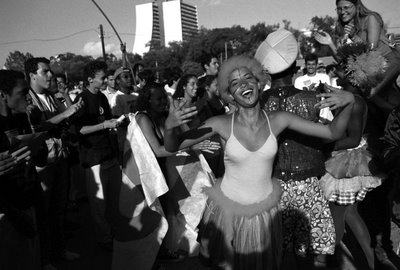
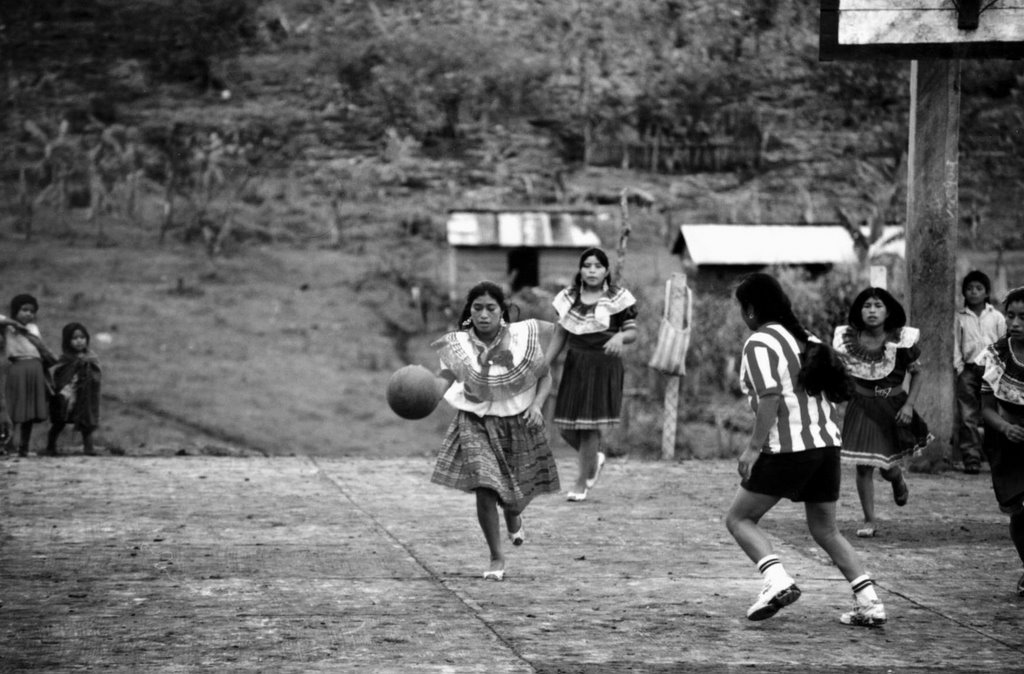
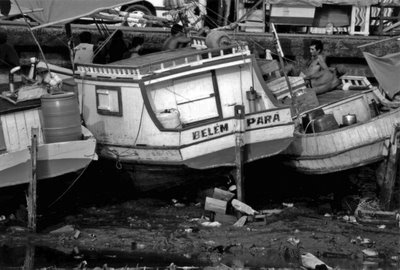
Clandestines is a collection of short stories operating as a psychogeography of social and revolutionary movements from the late 1980’s on, mapped by a radicalized Irish anti-authoritarian. Moving from the Old to the New World the stories track the convulsions of the global system and its revolutionary undercurrents through the experience of our erstwhile story-teller. His astute observations embellish reporting, advocacy and tall tales of unpredictable characters and communities to construct an optimistic, if quixotic take on these end times. At its heart it is a testament to hope for the world vibrantly illustrated by handrawn maps and black and white photographs.

The first section of the book details radical movements in Europe. The initial stories take place in the squatted communities of Berlin during the twilight of the Cold war. It is full of vivid descriptions of anarchists hopping eastward over the Berlin wall to escape the western riot police “welcomed by East German border guards with tea and biscuits” when not battling the bullen on Mayday. Back in the squat 20 hour sessions of ideological gymnastics necessary to organize anything will get a belly laugh from anyone familiar with consensus decision making. Many of the stories are hilarious and more useful for it. A young voice, enraptured with enticements of life and hopeless love among the barricades evokes a lost space that became more about lifestyle than in-depth political struggle. Still, because we are watching through the eyes of a teenage rebel engrossed in the business of actually creating another world this eulogy to the heroic phase of the Autonomes and the European squat scene registers powerfully just how much the terrain of youth culture and street politics has shifted since the end of the cold war.

At a rainbow gathering in Croatia we travel with an older, worldlier protagonist, looking for a bit of R&R after the G8 mobilization in Genoa. He balks at the apolitical nature of the participants, plotting his smart comeback if, “another naked yuppie computer programmer from Munich calls me ‘brother’” and lamenting the evolving plans of the tribe to impose their next gathering on the “unsuspecting” residents of the Brazilian Amazon. The story grapples with how lifestyle too often replaces politics and creates reactionary simulacrum of radical space. We have seen the `counterculture’ of the 1960’s repeatedly conflated by the mainstream media and baby boomer pundits with the real social and political movements of that era. There is a cautionary note here surrounded by a story of boredom and nudity in the wilderness, “one more push, idealists, if you want to be revolutionaries.”

Indeed, this thread runs throughout the collection. There is a common understanding by the narrator of his own romantic proclivities, which simultaneously inspire and hamper him. Working on a banana boat criss-crossing between Europe and Central America, he imparts enthusiastic histories of the reign of pirates in early capitalism. However his Filipino and Chinese workmates are often underwhelmed by his musings on Atlantic proletarian life.

“There is no mystery to the sea, it is simply the ocean and we are a metal box floating on top of it. And it is dangerous, stupid even. We are all fools, and we do it only because we have to”

It is in the New World, the final section that the movement, embodied in this experience by the Zapatista’s radical autonomous organization reaches a zenith and where our interlocutor has lived for the last decade. These narratives engage with issues that preoccupy activists globally. At the Third Encuentro in Brazil the confrontation between proponents of horizontal organizing and participatory democracy and those who would have reform within existing hierarchies, is animated for the reader. However, some of the best stories in this section are told during seemingly interminable, bumpy trips through Central America. Tales From a Vanquished Pier is a fantastic yarn that slides easily into hilarious absurdity. The Chicken Bus Diaries offers a sober view of changes wrought in the years between the twilight of Sandinismo, when our pirate was a bright eyed young solidarity activist, and the new millennium, by which time the neoliberal counterrevolution had taken its pound of flesh and created a pressing need for new tactics.

Western activism has spawned numerous academics, a cadre of journalists and a million filmmakers, yet we are sparse in the tradition of storytellers, bards. There is not a contemporary literary tradition among those engaged in struggle, as there is in the global south. Clandestines perches between these. In the more edifying passages the desires of the participant narrator to instruct can undermine the integrity of the stories. But most of the time we have a very funny map of a committed life and a guide for whom writing is “a joy, not a chore.”

Review - Wooden Shoe.

"In the great tradition of Irish Sory-tellers, Ryan brings a whole new idea to International Solidarity..."
Book: Clandestines: the Pirate Journals of an Irish Exile by Ramor Ryan
Review by: James Generic Posted: 8.24.2006
At first I thought it was going to be an over-romantic story of this guy travelling around the world in order to avoid himself, in the way that a lot of Crimethinc type of stuff reads. I'm really not into that kind of stuff. However, he really surprised me, and I'm ashamed I thought that of him in the first place in association with Crimethinc, because this guy is a real character, a great writer, and no one can call him fake for leaving out the messy details. In fact, read about his review of the two different "Days of War and Nights of Love" (one by Crimethinc, and one by Eduardo Galeano) online.

In the great tradition of Irish story-tellers, Ryan recalls experiences from the squats of West Berlin, the war zone of Kurdistan, the revolution and post-revolution repression in Nicauragua, his youth in Ireland watching the British army attack a Republican demonstration, and much more. He is an exile from his native land, moving from situations of struggle across the planet with a keen analysis of each. Ryan left Ireland in the 1980s for Nicaragua to help defend the Revolution there, and ended up seeing the Sandinistas crumble under the might of the US-funded Contras, alienating Indigenous peoples struggling for autonomy in the process. He remarks that a generation of international solidarity activists in the 1980s got their start in Nicaragua; much like many saw the same in Chiapas in the 1990s.
If you've never heard of Ramor Ryan, look him up. I would love to meet him, because this guy has such a wealth of information and has seen so much without thinking he is better than anyone else for having done so. He brings a personal touch to bloody places stormed by revolution, repression, and fights for a better world. By the end of it, I thought to myself that he had really lived his life thus far to the fullest, and brought a whole new meaning to what I thought of as an "international solidarity" activist. Much of what he writes is exciting in that revolutionary situations are very much within reach, but at the same time depressing when he discusses the aftermath in the case of defeat (like in Kurdistan or in Nicaragua).

If you want to find an inspirational person, you have to meet Ramor Ryan by reading his Clandestines.

On the road with an Irish pirate
international | anarchist movement | review Saturday December 09, 2006 18:19 by Ciaran Murray
Clandestines, The Diary of an Irish Pirate Exile by Ramor Ryan AK Press €13.45 / £9.00
While it can be hard to come across political documents that inspire, entertain and amuse, Ramor Ryan‘s Clandestines succeeds in doing just that. Some may know Ryan from his articles in “We Are Everywhere” and “Confronting Capitalism” but Clandestines is his first published book. It is, for the main part, a travel diary and a readable mixture of personal memoir and political essay written over his many years as an anarchist activist. The book covers his journeys to a broad gamut of societies in struggle, from Berlin to Northern Ireland, Nicaragua to Turkey and many places in between.


The book is full of true, fantastic and at times audacious tales seen through the eyes of an Irish anarchist who is experiencing an irreversibly changing world first hand. The world Ramor traverses sees the collapse of “communism” in Eastern Europe, a growing sense of revolution in South America and the birth of a modern anti-globalisation movement. While at all times political yet personal, Ramor frequently forays into his relationships with activists, friends and strangers he picks up along the way, each who provide the reader with their personal affections and experiences.

What follows is something that reads like a modern hybrid of Behan’s Borstal Boy and the Canterbury Tales, with Ramor compiling the characters’ stories as he goes along, and using them to meaningful, insightful, and, at times, touching effect.

While the book could have fallen into an unintelligible journal of wholly separated and abstract events, Ryan brings events and people together and finds a common theme, of the shaping of these characters from the historic and social pressures of a rapidly changing world.

From the Kurdish guerrillas, to the Sandinistas, to the female bartender he meets in Cuba, Ramor documents people and communities coming to terms with a new, neo-liberal, world order. In Berlin, he experiences the life of a radical squatter and the regular running battles with local police associated with it. In Northern Ireland, he encounters the massacre of mourners at a republican funeral, and a community drawn together to cope with a violent and sectarian society.
In Turkey, he finds the volunteers of the PKK in training, young men and women willing to give up their lives for their idea of a Marxist revolution, and a feeling that if the world wasn’t ready for revolution they, at least, were. In South America he watched the Sandanistas take power in Nicaragua, while the FMLN were on the brink of overthrowing the government in El Salvador and the radical movements in Guatemala and Honduras gained ground.

Whether read as a travelogue, political document or collection of nostalgic memoirs, “Clandestines,” is a book that anyone with an interest in late 20th Century politics will understand, and enjoy.

Horde Story
I never came down
Dublin 1988

The old Foggy Dew was stuffed as usual, and it was hard to get served coz the two old-lad barmen were wrecked, too drunk to pump. A couple of the punters - punks with lurid red mohawks - leaned over the taps and served themselves, an act that took some nerve because the old lads were drunk but not stupid, and prone to outbursts of ultra violence.

Discussion around our table turned to the recent Golden Horde gig at the Baggot Inn where Simon, with characteristic unruliness, had lept in to the heaving mosh pit fists-flying to sort out some perceived wrongdoing. The Red Action lads were having none of it, and Simon disappeared under a barrage of punches. Des downed his guitar and dived into the melee to dig Simon back out. A typical Horde gig - never a dull moment.
Since we were all merrily squashed on top of one another into one of the Foggy Dew's smelly coves - friends and strangers alike - our neighbour joined in the conversation uninvited.
"Mongolians?" she asked.
"Mongolians?"
Yeah, Mongolians, Kazakhstan, the Golden Horde. Thirteenth century?"
"Eh, No, rock n roll band, Dubliners, 1988."
Turns out this knowledgeable girl had just returned from the disintegrating USSR – hence her exotic frame of reference. She must have been gone a long time coz she had never heard of the non-Mongolian Golden Horde.
"You gotta go see them," I said, "they are fucking magic."
"Grand," she said, "where they playing?"
Every Golden Horde fan knows where the next gig is going to be.
"Actually they are playing Kenmare tomorrow night, some festival..."
" Kerry? Great, lets go!"
Yeah, hey hey lets go. Very Horde. I liked this plucky sprite fresh from the USSR. She said her name was Aurnia and hailed from Dolphin's Barn . We supped up our pints of Guinness and left in search of adventure at closing time. But there was nowhere to go after closing time in Dublin that era. We tried the late night winery Blazes but it was full. Doesn't matter, we need to get up early for the hitch to Kerry tomorrow. Getting into the swing of things, I pulled out a can of spray paint and write Love the Horde in gold on a wall in Thomas Street. Then we retire to her little bedsit above a butchers in the Coombe.

Hitching to Kerry is always a long trawl - worse when you're hung over and it's started to rain interminably. At a deserted crossroads somewhere around Waterford we almost give up and go back to Dublin. "We'll never get there. Its taking all day". Indeed it was, and cars were few and far between on this forlorn road in the middle of nowhere.
"Look," said Aurnia, ever the pragmatist. "You hide in the bushes, and a car will stop for me, a girl alone, then you can jump out and join me in the car, right?"
Right, great plan. Although not every car would stop for this punky girl with her bleached blond hair, stripey jumper and doc martins. She smiled prettily, and sure enough, a Hyatt van pulled over. Success! The side door was swung open and Aurnia beckoned me from the bushes. I jumped out and ran to the van, following her into the back.
Inside of the back of the dark windowless van, we were received by half a dozen lads brandishing a variety of hammers, pick handles and machetes. One particularly unpleasant looking character smiled at us with missing teeth and an axe in his hands.
"How'yas lads!" said Aurnia cheerfully.
Turns out they were a gang on their way to the next village for a scrap with the locals there.
"Will you join us?" they guffawed menacingly. I was hoping that that invitation meant that we wouldn't become their aperitif before their gristly main event. Fortunately Aurnia's fearless charm assuaged the boys more atavistic tendencies and we emerged from that bloodcurdling Hyatt van at the next crossroads shook up but unscathed.
Somewhat remarkably we finally got to Kenmare late that night still in high spirits. Our enthusiasm untempered by the arduous 10 hours on the road, we rushed over to the hotel where the gig was going on. It would all be worthwhile, once we were jumping around in the mosh pit while Rorschach blasted.
But the doors were closed. 'Full' announced a sign on the glass entrance door.
"Fuck it, fuck it."
As luck would have it, that very moment we spotted Des walking by the door guitar in hand, on his way to stage. We pounded the glass and screamed his name. A flicker of recognition crossed his face – I had been to about 50 Horde gigs for fuck sake, so well it should. The door opened, we explained our plight - how our spontaneous joy at the thought of seeing the Horde in Kerry had catapulted us onto the road and brought us here after an epic trawl and could he please get us in...
Des obliged with ubiquitous plumass and we found ourselves at stage front as Simon grabbed the stage mic and began with his usual drawl - "We're the Golden Horde and we come from Dublin. Are you ready to rock and roll?.." and a guitar mish-mash plunged us into the opening song Paula and complete bedlam at the stage front.
As Golden Horde gigs went, it rocked. Although I missed the usual sea of familiar faces in the mosh pit of the Horde Dublin contingent, the Kerry locals clearly knew how to have a good time and everyone went bonkers, jumping about. In the spirit of unbounded bon homie, anyone who fell onto the floor was dragged back up by legions of comradely arms. Unlike some of the more notoriously macho mosh pits, the Horde pit was girl friendly and here in Kerry, the girls and boys swung around in each others arms, crushed together, delirious, ecstatic and enchanted. Waves of frenetic guitar-fueled psychosis washed over us, and time stood still as the mosh pit became the whole of the universe. " Are you enjoying yourselves?" screamed Simon in his Joey Ramone drawl, more like a command than a question. "We're gonna play a song for you and its called...Everything Under the Sun," and like a ballistic missile off went the band and its alter-ego the mosh pit once more...
As the night stretched out and the Horde thumped out one of their notoriously long sets, it was clear the management wanted everyone to go home, and not smash up their premises in some crazed Horde inspired delirium. The band went out with a bang, playing 100 Boys and Sammy flung his guitar away like some rapturous lovesick lenashee.
A strange silence enveloped us. We stood there blinking and disbelieving that it could possibly be all over, a mob of sweat-dripping and delighted zealots wishing that the music and the mosh pit would go on forever and life could always be so.

Aurnia and I decided to go backstage to thank Des for getting us in, but the dressing room was manic and we couldn't get near him. it was like a little bit of CBGB's in the heroic years had descended upon this tiny little Kerry town - An Neidín in Irish.
"We should at least buy him a pint," said Aurnia, but of course between us we didn't have enough for a pint at hotel prices.

The night was cool and it had begun to rain gently. Past midnight, the little town square was in rabid uproar, with throngs of drunks heaving around and a bunch of lads whacking each other other with 6-foot long poles. In our spur of the moment dash for the road leaving Dublin that morning we had typically forgotten some essentials – like money for a hostel, or at least a sleeping bag. Never mind, high on life after the glorious Horde gig, nothing affected us and sure enough – as things always go in situations like this - everything worked out splendidly.
As we stood on the side of the road wondering where we would kip down, a tourist bus pulled up in front of us and the tourists descended, heading on-masse into their posh hotel. We mingled with the group and once inside the hotel lobby, slipped up the stairs unnoticed. On the second floor we found ourselves a deserted and warm television room, like a stowaway's paradise. Lights out, Aurnia and I - thrilled with ourselves - rolled about on the lush carpet in romantic abandon , and despite the furnace of passion, there was a tactic understanding between us that everything was connected and part of the great mysterious magic that was the Golden Horde. Love the Horde!

The sun shone the next day and we stood quite glorious on the side of the road confident that we would have a fine journey back to Dublin. "Let's ask the Horde for a lift," suggested Aurnia, but I was against the idea. Once after a Horde gig in some dingy and scary Loyalist bar in Belfast me and Angus asked the Horde for a lift home in their bus. Des - the nice one - said yes (of course), while Simon - the nasty one - said no. " We don't want no young punks puking up all over our tour bus" he snarled. But Des's kindness won out in the end and feeling honoured we climbed aboard the sacred inner sanctum of the Golden Horde. Sure enough Angus puked up all over the back seat of the bus, and Simon growled at us and then Des, somewhat righteously.

Aurnia, newly initiated into the mystical, incandescent church of the Golden Horde, was really getting in to it.
"Wheres the next gig?"
Rotterdam, I said.
"Lets go!" she enthused. "And from there we can head across Europe towards the Urals, like Golden Hordish viziers of old, in search of our Mongolian Xanadu!"
Aurnia was swinging dangerously out of control. I recognized this condition - the imperceivable but devastating Golden Horde incubus penetrating ones' inner being, introducing lascivious wantonness into the psyche like a hypnotic analgesic opiate. And once inducted, the world would never be the same again.

I tell you this : a whole sub-generation of Irish kids never came down. '''''''''''''''''''''''''''''''''''''''''''''''''''''''''''''''''''''''''''''''''''''''''''''''''''''''''''''''''''''''''''''''''''''''''''''''''''''''''''''''''''''''

New York Indypendent: Journey to the Ends of Anarchy

7/10 
Anarchist Story Teller Searches for a Better World--Finds Pain, Despair, Lingering Hope
 By John Tarleton
Indypendent

From the squats of Berlin to life as a deckhand on a Central American banana boat to the perilous mountains of rebel Kurdistan to an exhausted, mud-soaked slice of Zapatista utopia, Clandestines: The Pirate Journals of an Irish Exile is a rollicking travelogue. Ryan knows the traveler’s secret of being open to the moment and trusting whatever it brings. His poignant tales of defeat, desolation, betrayal and lingering hope are told with both humor and a canny insight into the human spirit.

Keywords: Analysis, Local, Culture, Activism,
Clandestines: The Pirate Journals Of An Irish Exile
By Ramor Ryan
AK Press (2006)

When traveling activist Ramor Ryan started working on his new book, he envisioned writing a political tract comparing the demise of traditional top-down leftist politics with the subsequent rise around the world of a new generation of decentralized, grassroots social movements that seek to transform power more than to seize it. Fortunately, Ryan ended up doing something entirely different: telling stories.

From the squats of Berlin to life as a deckhand on a Central American banana boat to the perilous mountains of rebel Kurdistan to an exhausted, mud-soaked slice of Zapatista utopia, Clandestines: The Pirate Journals of an Irish Exile is a rollicking travelogue. Ryan knows the traveler’s secret of being open to the moment and trusting whatever it brings. His poignant tales of defeat, desolation, betrayal and lingering hope are told with both humor and a canny insight into the human spirit.

Many of these tales end with bizarre twists – like the dictatorial banana boat captain who unexpectedly offers some absurd advice on the secret of happiness – that linger on in one’s mind. His then (1989-90) and now (2005) memories of Central America also give his larger narrative a painful twist as he returns to find societies that had once seemed on the verge of revolutionary transformation wrecked by war, neo-liberalism and the drug trade.

“This is a catastrophic region,” He writes. “Darkly violent places survive tenuously on remittances sent back from migrant family members working illegally in the U.S. and other countries. Nicaragua, the flagship of the failed revolutionary project, is like an orphaned child fallen in with a bad gang of glue-sniffing street kids.”

However, the least overtly political chapter in the book is perhaps the best written as he tells the story of a dismal Guatemalan port town and a group of lovesick housewives who cling to fading hopes that someday their immigrant husbands will bring them to the United States.

Beneath the artful storytelling, the author probes the Big Question that bedevils radicals of all stripes at this juncture in history: how do you transform a fundamentally flawed system that seems impervious to change? His witness to the cooptation and/or defeat of the Irish Republican Army (IRA), the Sandinistas, the Kurdish Workers Party (PKK) and the Brazilian Workers Party is sobering and leaves one longing for a new approach.

While Ryan wears his anarchist politics on his sleeve, the book never descends into a screed. If anything, he is overly vague about his politics. What is anarchism – a defiant posture toward an unjust world? An attempt to work freely and cooperatively with others? An archipelago of politicized sub-cultures scattered on the margins of the global shopping mall? How can such an amorphous movement pose a serious challenge to business as usual? None of this is made clear. If you’ve spent time in “free, rebel spaces,” you will know.

The most inspiring example Ryan can point to is the Zapatistas autonomous municipalities in the southern Mexican state of Chiapas. Unfortunately, this chapter, Diez de Abril, is only 12 pages long and it doesn’t explore whether the mutual aid that has flowered in Zapatista communities is due at least in part to their circumstances – isolated, impoverished, land-based communities in which neighbors must work together to survive – and not so easily replicated in modern, consumer societies where activists as much as anyone else tend to lead highly atomized existences.

Despite Clandestines’ limitations, the book is a delightful read. Hopefully, Ryan hasn’t used up his stock of entertaining stories.

Ramor Ryan as volunteer at Blackout Books, Ave. B, New York City anarchist bookstore.

San Francisco Bay Guardian : A Tribute to Resistance


"A rousing, insightful, humorous tapestry of cultural resistance, Clandestines impels us to fear inaction, not failure, for mistakes are made to be learned from, and our lives are our own..."

San Francisco Bay Guardian
CLANDESTINES: THE PIRATE JOURNALS OF AN IRISH EXILE
By Ramor Ryan
AK Press
160 pages
$15.95 paper

"The rebel must return to their own past with a knife in one hand and a bouquet of flowers in the other," writes Ramor Ryan in Clandestines: The Pirate Journals of an Irish Exile. For nearly two decades, Ryan has been a political traveler, crossing the globe as both a keen observer and an earnest participant in many of the world's resistance movements. From Turkish Kurdistan to Sandinistan Nicaragua to East Berlin, he has kept one eye on the lookout for the powers that be and the other on history, contextualizing the adventures of the present by examining the lessons of the past in a manner both critical and celebratory.

Ryan's exhilarating and inspiring tales reveal the intersections of globalized politics' grand narratives and everyday life. The people he meets welcome him into their lives, into crowded Havana tenements and seedy Guatemalan port-town bars, as he searches for the spirit of struggle that underlies survival. "We look about us, our own lives, and we begin to resist where we are," he writes.

Clandestines is a tribute to resistance, which in his view, in the 21st century, is best enacted not in the trenches but in carved-out autonomous spaces — spaces of clandestinity. After examining failed revolutionary struggles in a world with one superpower, Ryan concludes that rather than battling power on its own terms, we must create our own alternatives. "Clandestinity is about protecting ourselves, our rebel spaces, and allowing the seed to germinate underground," he writes, taking us into German squats, Zapatista villages, and Sandinista coffee co-ops. But not just any autonomy will do — it must be engaged, not escapist, as is evident from his condemnation of a naively hedonistic Rainbow Gathering he attends in Croatia.

A rousing, insightful, humorous tapestry of cultural resistance, Clandestines impels us to fear inaction, not failure, for mistakes are made to be learned from, and our lives are our own. (Hunter Jackson)...